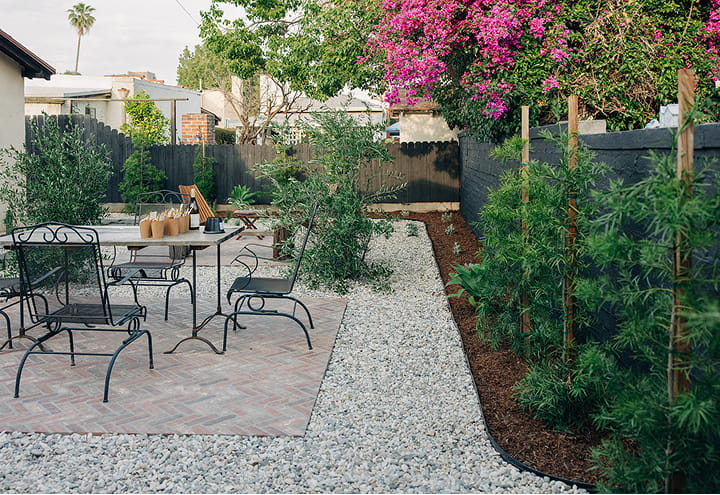
Native California Plants That Add Color, Texture, and Pollinator Life
Read more


Your yard is more than an outdoor feature—it’s an environment that quietly shapes how you feel each day. The colors you see, the textures under your feet, the sounds in the background, and even how easy it is to move through the space all influence your mood, energy, and sense of well-being. Thoughtful outdoor design isn’t just about aesthetics; it’s about how a space supports your nervous system, your creativity, and your daily rhythms.

Being outdoors has a powerful calming effect on the body and mind. Natural elements like plants, sunlight, and fresh air help lower stress hormones and restore a sense of balance. A yard filled with greenery and natural materials invites you to slow down, breathe deeper, and feel more present. Even short moments outside—watering plants, sitting under a tree, or stepping out barefoot—can help reset your mood after a long day.

Cluttered, overcomplicated spaces can create subtle mental stress, even if we don’t consciously notice it. In contrast, outdoor spaces designed with intention and simplicity promote clarity and ease. Clear pathways, open gathering areas, and a limited plant palette allow the mind to relax. As with life, the most peaceful landscapes often come from doing fewer things, but doing them well.

Nature has long been known to spark creativity. When your yard offers quiet corners, filtered light, and visual interest without distraction, it becomes a place where ideas can surface naturally. Whether it’s a bench tucked into the garden or a shaded patio for journaling and reflection, these spaces encourage imagination and problem-solving in ways indoor environments often can’t.

A well-designed yard fosters a sense of safety and belonging. Spaces that feel welcoming—soft lighting, comfortable seating, and thoughtful transitions—encourage you to spend more time outside and invite others to gather with you. These shared moments, whether conversations over dinner or quiet evenings listening to the birds, strengthen emotional connections and create lasting memories.
The most meaningful outdoor spaces begin with one simple question: How do I want to feel here? Calm. Grounded. Inspired. Connected. When landscaping is guided by emotion rather than trends, the result is a yard that supports your well-being through every season of life.
Your outdoor space has the power to shape your mood in subtle but lasting ways. By designing with intention, simplicity, and respect for nature, your yard becomes more than a backdrop—it becomes a source of balance, creativity, and quiet joy.
Every project begins with a conversation — we'll help you figure it out.
.jpg)